Back Pain Treatment in North Port, FL

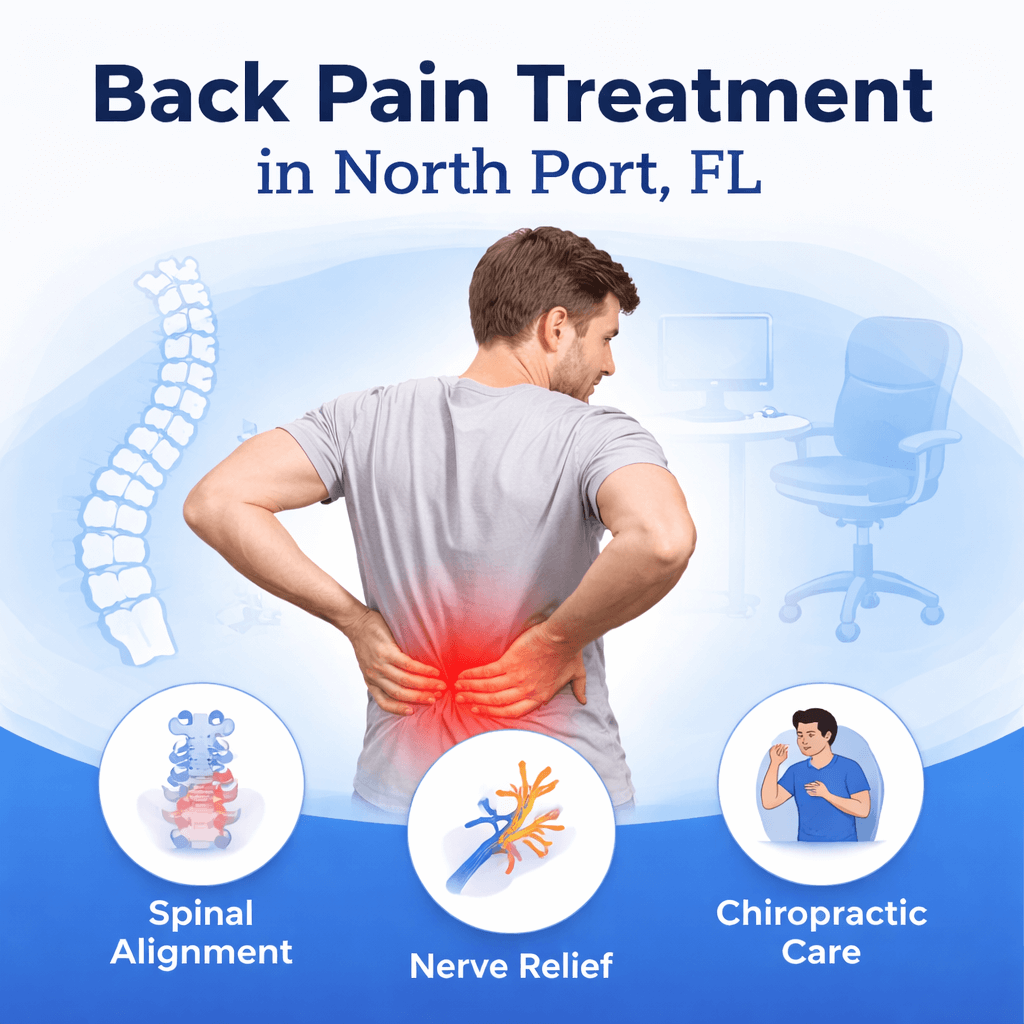
Image illustrating back pain for a chiropractor in North Port

Back pain can interfere with nearly every part of daily life — from standing and walking to working, sleeping, and lifting. At Z Chiropractic, back pain care focuses on identifying what’s actually causing the problem and restoring healthy movement in the spine, not just masking symptoms.

Back pain is discomfort, stiffness, or tension in the lumbar or thoracic spine that can limit mobility and reduce quality of life. It often develops when muscles, joints, discs, or nerves in the back become irritated due to poor posture, repetitive strain, injury, or spinal misalignment. Back pain may be acute or chronic and can sometimes radiate into the hips or legs. Identifying the underlying cause of back pain is essential for effective treatment and long-term relief.

Whenever you’re searching for chiropractors and chiropractic care near you, don’t forget to choose us especially if you’re specifically looking for:

  • Chiropractor near me
  • Chiropractic care near me
  • Back pain help
  • Back pain near me

Common Causes of Back Pain

Poor Posture or Prolonged Sitting

Modern lifestyles often require long hours of sitting, especially at desks, in cars, or on couches. Poor posture — such as slouching, forward head posture, or rounded shoulders — can shift stress onto the spine and surrounding muscles.

Over time, this added stress can cause spinal joints to lose normal movement, muscles to become overworked, and certain areas of the back to compensate for poor alignment. This can lead to stiffness, tension, and pain that gradually worsens if posture habits aren’t addressed.

Muscle Strain or Overuse

Back muscles work constantly to support posture and movement. Repetitive activities, sudden movements, or lifting without proper mechanics can overload these muscles, leading to strain or micro-tears.

Muscle strain may cause localized pain, tightness, or spasms. When muscles become tight or fatigued, they can also pull on spinal joints, contributing to restricted motion and discomfort. Even minor strains can linger if the underlying movement patterns aren’t corrected.

Disc Irritation or Degeneration

Spinal discs act as shock absorbers between the vertebrae. Over time, discs can become irritated due to repetitive stress, poor posture, or age-related changes. Disc issues may lead to stiffness, aching, or sharp pain depending on severity.

In some cases, disc irritation can affect nearby nerves, contributing to radiating pain into the hips or legs. Identifying disc involvement is important when determining the safest and most effective approach to care.

Joint Stiffness or Spinal Misalignment

Spinal joints are designed to move smoothly and evenly. When joints become restricted or misaligned, normal movement patterns are disrupted. This can increase wear on certain areas of the spine and force muscles to work harder to compensate.

Joint stiffness is a common contributor to chronic back pain and can reduce flexibility, making everyday movements like bending or standing uncomfortable. Restoring proper joint motion is often a key focus in chiropractic care.

Nerve Compression or Inflammation

Nerves exit the spine and travel to different parts of the body. When spinal joints, discs, or tight muscles place pressure on these nerves, it can lead to pain, tingling, numbness, or weakness.

Nerve irritation doesn’t always cause sharp pain — it can also create dull aches, burning sensations, or symptoms that travel into the legs or hips. Reducing stress on the nervous system is an important part of addressing back pain effectively.

Work-Related or Lifting Injuries

Jobs that involve repetitive movement, heavy lifting, prolonged standing, or awkward positions can place significant strain on the spine. Even a single improper lift can cause joint restriction or muscle injury.

Work-related back pain may develop suddenly or build gradually over time. Addressing how the spine moves and functions — not just where it hurts — can help reduce the risk of ongoing or recurring issues.

Frequently Asked Questions (FAQ) regarding Back Pain

Can a chiropractor help with back pain?

Yes. Chiropractic care focuses on improving spinal movement, reducing joint restriction, and addressing nerve irritation that may contribute to back pain. Care is personalized based on how the spine and surrounding tissues are functioning.

How do I know if my back pain is serious?

Back pain that is persistent, worsening, or affecting daily activities may benefit from professional evaluation. A consultation can help determine whether joint restriction, muscle tension, or nerve involvement may be contributing.

Do I need imaging before seeing a chiropractor?

In many cases, imaging is not required initially. A chiropractor evaluates posture, movement, and spinal function first and may recommend imaging if clinically appropriate.

Is chiropractic care safe for lower back pain?

Chiropractic care uses controlled, precise techniques tailored to each patient. Treatment plans are based on comfort, safety, and individual needs.

How many visits will I need for back pain?

The number of visits varies depending on the cause of back pain, how long symptoms have been present, and individual goals. This is typically discussed after an initial evaluation.

Back Pain Doesn’t Have to Control Your Day

Back pain can affect how you work, sleep, and move, but it doesn’t have to become a long-term issue. Chiropractic care focuses on identifying the underlying causes of back pain and restoring healthy movement in the spine rather than masking symptoms.

At Z Chiropractic, care is personalized, conservative, and focused on long-term results. A consultation can help determine whether chiropractic care is the right next step for your back pain.

Schedule Care for Back Pain

If you’re experiencing back pain and want answers, scheduling a consultation is the first step. During your visit, Dr. Lulzim Zulbeari will evaluate posture, movement, and spinal function to help identify what may be contributing to your symptoms.

Care is tailored to your needs, comfort, and goals — with an emphasis on safety and long-term spinal health.